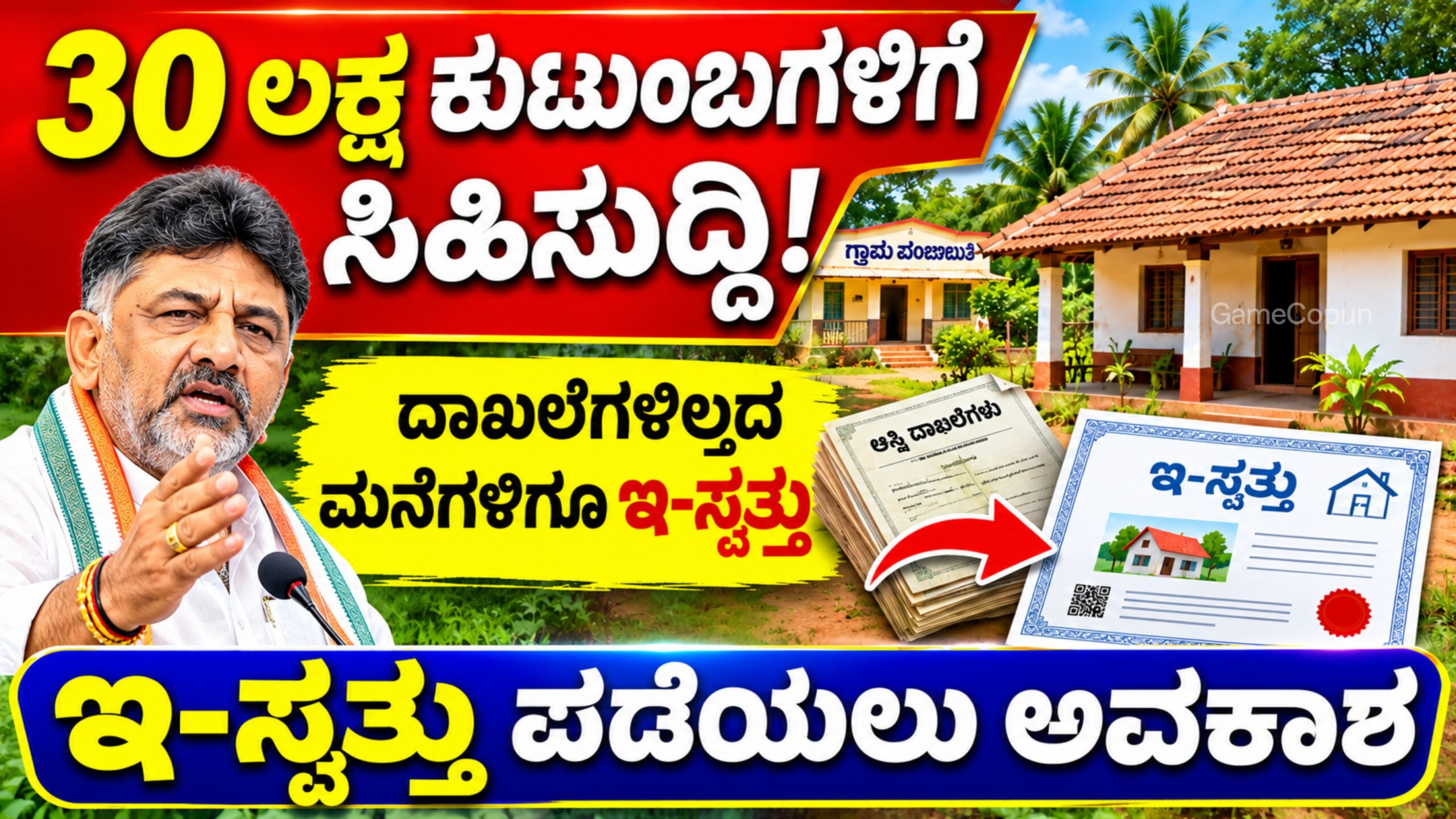
Thousands of rural households in Karnataka have been waiting for a solution to their property documentation problems. Although many families have occupied and maintained their homes for decades, the absence of proper ownership-related paperwork has made it difficult for them to obtain official property records.
Now, a proposed development concerning Karnataka’s E-Swathu system has brought fresh hope to these families. The initiative is expected to make property documentation more accessible to eligible rural residents, including those who do not possess conventional property documents.
According to the reported information, nearly 30 lakh rural families could benefit from this development. Let’s take a closer look at the expected changes, eligibility conditions, application procedure and other important details.
A Major Relief for Families Facing Property Documentation Problems
In several villages across Karnataka, residential properties have been occupied by families for generations. However, not every household has old sale deeds, registered documents or other formal records to establish its property history.
This creates difficulties when residents approach the Gram Panchayat for property-related services.
The proposed E-Swathu update aims to address these long-standing difficulties by providing a suitable verification mechanism for eligible properties that currently lack conventional documentation.
The objective is to improve rural property records and help eligible families access the relevant government services.
Why Is the E-Swathu Update Important?
E-Swathu plays an important role in maintaining property information in Karnataka’s rural local bodies.
Without proper property records, residents may encounter difficulties while dealing with certain property-related administrative procedures.
The proposed changes could help in the following ways:
- Provide a documentation pathway for eligible rural properties.
- Reduce difficulties faced by families without conventional records.
- Improve the accuracy of Gram Panchayat property databases.
- Make property-related administrative services more accessible.
- Bring previously unrecorded eligible properties into the digital record system.
Who Could Benefit From the New Facility?
The proposed facility is particularly relevant to rural households that have been unable to obtain E-Swathu records because of documentation issues.
Potential beneficiaries may include:
- Families living in ancestral houses without registered documents.
- Rural residents possessing old residential properties.
- Households with incomplete property documentation.
- People who have been unable to complete E-Swathu registration.
- Eligible property occupants within Gram Panchayat jurisdiction.
However, simply living in a property for several years does not automatically establish legal ownership. Every application will be subject to the applicable government rules and verification.
Keep These Documents Ready Before Applying
Although the final document requirements will depend on the official notification, applicants can keep commonly used supporting records ready.
- Aadhaar card of the applicant.
- Ration card or other residential address proof.
- Previous property tax receipts, if available.
- Electricity or water connection bills.
- Old property-related documents, if available.
- Documents supporting possession or ownership claims.
- Applicant’s mobile number.
- Recent passport-size photographs.
Applicants should check with their Gram Panchayat before submitting documents, as additional evidence may be required.
Application Procedure: How Can Rural Residents Proceed?
The application process and availability of online facilities will depend on the final government instructions.
Once the relevant procedure is officially announced, eligible residents can take the following general steps:
1. Contact the Local Gram Panchayat
Visit the Gram Panchayat office responsible for your village and explain that your property does not have conventional ownership documents.
2. Enquire About the Special Verification Facility
Ask whether applications are being accepted under the proposed E-Swathu documentation process.
3. Submit Available Property Evidence
Provide the documents and supporting information requested by the authorities.
4. Complete Property Verification
The concerned officials may examine the submitted records and inspect the property to verify its details.
5. Wait for the Official Decision
After the verification process, the competent authority will decide whether the property qualifies for an E-Swathu record under the applicable rules.
Will the Government Introduce Changes to E-Swathu Software?
One of the important aspects of the reported development is the expected improvement in the existing digital property-record system.
Changes to the software and verification mechanism may be required to accommodate eligible properties that do not have conventional documentation.
Such improvements could help local authorities maintain better records and reduce procedural difficulties for rural residents.
Expected Dates for the Karnataka E-Swathu Update 2026
As reported in the source information, the proposed timeline is:
- November 2026: Expected commencement of the application-related process.
- December 2026: Expected beginning of the distribution process.
These dates should be treated as reported expectations rather than confirmed deadlines. Applicants should wait for an official government announcement before making arrangements.
Where Can You Check E-Swathu Information?
Rural property owners can visit the official Karnataka E-Swathu portal to check available property-related services and updates.
Official Website: https://eswathu.karnataka.gov.in/
They can also contact their respective Gram Panchayat offices for information about application requirements and verification.
Final Words
For rural families who have been struggling with missing property documents, the proposed E-Swathu development could provide an important opportunity to regularise eligible property records through the prescribed administrative process.
However, beneficiaries should not rely solely on unofficial announcements. The final eligibility conditions, verification rules and application dates will be determined by the Karnataka Government.
If your family has been unable to obtain E-Swathu because of missing property documents, keep your available records ready and stay updated through official government channels.
Disclaimer: This article is intended for general informational purposes. The reported beneficiary figures and proposed dates are subject to official confirmation. An E-Swathu entry does not by itself establish conclusive legal ownership of a disputed property.